
What Information Should Be Included in a Steel RFQ?
A practical guide for international steel buyers: the essential information to include in your RFQ to get accurate quotes, reduce delays, and ensure smooth procurement.
Introduction
A well-prepared Request for Quotation (RFQ) is the foundation of smooth international steel procurement. Incomplete or unclear specifications can lead to delays, inaccurate pricing, and mismatched products. By including the right information from the start, you help your supplier return an accurate and competitive quotation — often within 24 hours.
This guide explains the key information you should include when sending a steel RFQ to an international supplier. Whether you are purchasing structural sections, coils, pipes, or flat products, the same principles apply. For an overview of the product categories we supply, visit our products page.
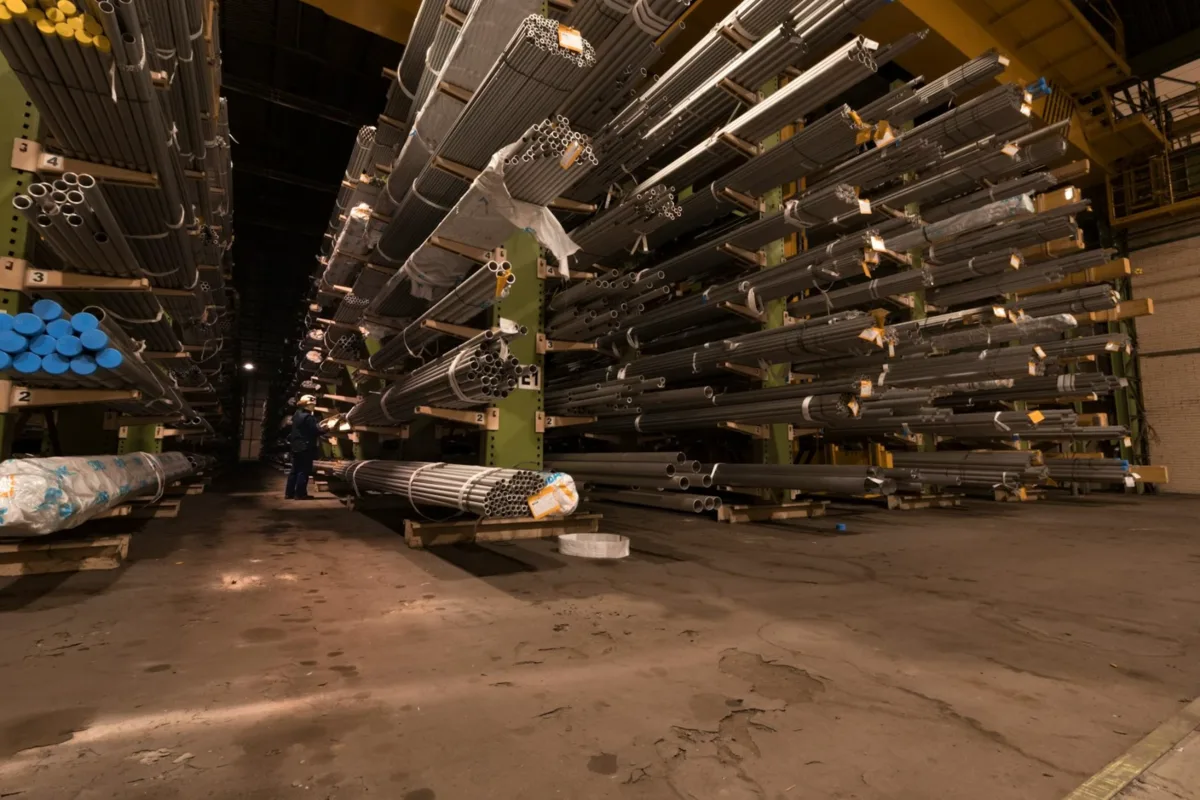
Steel products prepared for international RFQ and export supply — a clear specification helps your supplier return an accurate quotation and avoid costly misunderstandings.
1. Product Type and Standard
Start your RFQ by clearly identifying the product and the applicable standard. Ambiguity in this section is one of the most common causes of quotation delays.
- Product type — Specify exactly what you need: H beam, I beam, channel, angle, flat bar, round bar, steel plate, hot-rolled coil, cold-rolled coil, galvanized coil, rebar, seamless pipe, welded pipe, or wire rod.
- Applicable standard — Name the governing standard: GB, EN, ASTM, JIS, DIN, BS, or ISO. For example, GB/T 11263 for H beam, ASTM A36/A572 for structural sections, EN 10025-2 for hot-rolled structural steel, JIS G3101 for general structural steel, or ASTM A53 for pipe.
- Steel grade — For structural steel, common grades include Q235B, Q355B, S275JR, S355JR, A36, A572 Gr.50, and SS400. For pipe, specify grades like API 5L Gr.B, X42–X70, or ASTM A106 Gr.B.
When sourcing from China, your supplier should be able to supply against any of these standards. See our quality standards for more details on material traceability and documentation.
2. Dimensions and Length
Provide complete dimensional information. For each item in your RFQ, include all relevant measurements:
- Section / profile dimensions — For beams: height × flange width × web thickness × flange thickness. For channels: height × flange width × web thickness. For pipes: outer diameter × wall thickness. For plates: thickness × width × length.
- Length — Standard mill lengths vary by product. Typical options: 6 m, 9 m, 12 m, or 18 m for structural sections. Custom lengths are available on request but may affect lead time and pricing.
- Tolerance — If your project requires tighter tolerances than the standard default, specify this upfront. For example, tighter straightness or thickness tolerance requirements should be stated in the initial RFQ.
3. Quantity
Clear quantity information helps your supplier plan production, allocate stock, and optimize logistics. Always include:
- Pieces — The total number of pieces for each item
- Metric tons — The estimated total tonnage (pieces × theoretical weight per piece)
- Coils / bundles — For coil and bar products, indicate the preferred coil weight or bundle size if known
- Project scope — Whether this is a trial order, a single project order, or part of a recurring requirement — this helps the supplier offer appropriate commercial terms
4. Surface and Processing Requirements
Steel products come with a range of surface finishes, and the right choice depends on your application and the transit environment. Common options available through SHEDAR's supply network include:
- Hot-rolled / mill finish — The standard as-rolled surface with a dark oxide scale layer. Suitable for structural applications where steel will be embedded in concrete or coated on site.
- Shot blasted — Mechanical cleaning to SA 2.5 cleanliness, removing mill scale and surface rust for paint adhesion.
- Shop primer — A thin anti-corrosion coating (typically 15–25 µm) applied after shot blasting, providing 3–6 months of transit protection.
- Hot-dip galvanized — A zinc coating applied after fabrication. Common for outdoor structures, guardrails, and transmission towers.
- Pre-painted / color coated — For PPGI and PPGL coils, specify the coating type (PE, SMP, HDP, or PVDF), top coat thickness, and RAL color code.
If your steel will travel by sea, we recommend at minimum a shop primer. Unprotected mill-scale steel can develop surface rust during ocean transit, especially in humid conditions.
5. Inspection and Documentation
A complete documentation package is essential for customs clearance, project compliance, and claims handling. For each shipment, specify your requirements:
- Mill Test Certificate — The foundational quality document. Confirm chemical composition, yield strength, tensile strength, and elongation for each heat or lot.
- EN 10204 3.1 — The widely accepted standard for mill test certification in international steel trade. Request this where applicable to your market or project specification.
- Third-party inspection — SGS, Bureau Veritas, TUV, or equivalent inspection at the mill or loading port. Available on request and recommended for critical or large-volume orders.
- Loading photographs — Document container or breakbulk loading with bundle tags visible. Essential supporting evidence for any claims.
Always cross-check that the heat numbers on the MTC match the bundle or tag numbers on your shipment.
6. Destination and Trade Terms
Shipping and delivery arrangements significantly affect total cost. Include these details in your RFQ:
- Destination port — The seaport where the cargo will be discharged. This determines ocean freight cost and transit time.
- Incoterm — The internationally recognized trade term that defines cost and risk responsibilities. Common terms for steel imports include FOB (port of loading), CFR (cost and freight to destination), and CIF (cost, insurance, and freight).
- Required delivery window — Your preferred delivery date or acceptable window. Standard lead times from Chinese mills range from 20–45 days depending on product, quantity, and current production schedules.
Our export services team handles container loading plans, breakbulk coordination, and documentation to match your Incoterm and destination port requirements.
7. Packing and Shipping Requirements
If your project has special packing or shipping requirements, state them in the RFQ to avoid surprises:
- Bundle weight — Standard export bundles are typically 2–3 tonnes each. If your site has manual offloading, request lighter bundles (1–2 tonnes).
- Container or breakbulk — Sections longer than 11.8 m require a 40' container, flat rack, or breakbulk vessel. Specify if you have a preference.
- Edge protection and dunnage — For sensitive or precision-cut products, request additional edge protection or timber dunnage to prevent damage during transit.
- Weather protection — For coils and flat products shipped to humid regions, specify if VCI (volatile corrosion inhibitor) wrapping or desiccant bags are required inside the packaging.
- Marking requirements — If your project requires specific bundle tags, color coding, or shipment marks for identification on site, include those details.
8. Simple RFQ Checklist
Use this checklist when preparing your next steel RFQ. A complete inquiry helps you receive faster, more accurate quotations:
- Product type (H beam, coil, pipe, plate, rebar, etc.)
- Applicable standard (GB, EN, ASTM, JIS, etc.)
- Steel grade (Q235B, Q355B, S355JR, A36, A572 Gr.50, SS400, etc.)
- Dimensions (section size, thickness, wall thickness, width, etc.)
- Length (standard or custom)
- Quantity (pieces and/or metric tons)
- Surface treatment (mill finish, shot blasted, shop primed, galvanized, etc.)
- Inspection requirements (MTC, EN 10204 3.1, third-party inspection)
- Destination port
- Incoterm (FOB, CFR, CIF)
- Delivery window or required date
- Special packing or marking requirements (if any)
Conclusion
A complete steel RFQ is the fastest path to an accurate price, a realistic lead time, and a smooth import process. When your specifications are clear and your documentation requirements are stated upfront, your supplier can focus on delivering the right product — not chasing missing details.
If you are preparing a steel inquiry, contact us with your product list, grades, quantities, destination port, and Incoterm. We typically respond within 12 working hours with a quotation covering grade, dimensions, quantity, delivery terms, and estimated lead time. You can also use our Request a Quote form for a structured inquiry.
Request a Quote
Email: sales@shedarsteel.com
WhatsApp: +86 187 6618 5630
Related Products
Explore our structural steel product range:
Need H Beam or Other Structural Steel?
Tell us the grade, size, quantity, and destination port. We respond within 12 working hours with a quotation, lead time, and delivery terms tailored to your project.